
When I first started fertility treatment, I was considered a home run patient. I was in my late twenties, my partner had ample sperm and there was no obvious diagnosis standing in the way of pregnancy.
My first fertility doctor said, and I quote, "I see no reason why you won't walk out of here pregnant." A coordinator told me I was "the baby of the fertility clinic." Another mentioned a different patient who "went through a lot to get pregnant," the implication being that I hadn't gone through much, and wouldn't have to. They had a lot of unwarranted confidence in that next IUI.
Eight years later, I had been treated in clinics across the country, undergone nine egg retrievals, run out of embryos more than once, and experienced the particular pain of a positive pregnancy test followed by beta numbers that refused to rise.
Undergoing an embryo transfer no longer felt like an act of optimism. It felt like a vicious loop I was stuck in: one in which my uterus (and its "beautiful lining!") had become a place where perfectly healthy embryos were sent to their demise.
After five transfers that didn't result in a baby, I didn't know if I could face the pain, the disappointment, and the intense feelings of failure again.
My experience was not unique. I didn't know it at the time, but I was hitting all the big risk factors that people tend to experience before dropping out of treatment.
A 2018 survey of insured patients found that the most common reason for dropping out of treatment was psychological burden.¹ It was emotional distress, not their odds of success or their finances, that led patients to walk away from the very treatment that statistically gave them the best chance of becoming parents.
And this distress is far from uncommon; a 2019 meta-analysis in the International Journal of Reproductive BioMedicine found that infertile women are nearly three times more likely to experience clinically significant anxiety than fertile women; their rates of depression were nearly nine times higher.²
This distress doesn't only affect a patient's mental wellbeing. It affects whether they can stay in treatment long enough to get the result they're looking for. The cruel irony is that simply having the diagnosis that requires treatment makes a patient more likely to experience the kind of distress that drives people to leave it.
How this distress manifests itself varies person-to-person. For me - I isolated myself from friends and family. I turned my failure inward and constantly blamed myself. All while grappling with an uncertain future and the very real possibility that the plans of motherhood I’d had for as long as I could remember may never be more than a dream I once dreamed.
I was experiencing what so many fertility patients face, and I was on the verge of doing what so many others do - walk away from it all.
The choice to walk away from treatment, should be just that - a real choice, with real viable alternatives, but what I often hear from patients is “I couldn’t do it anymore, I didn’t have a choice.”
My journey brought me right up to the edge of that breaking point - and in that moment, I think I instinctively knew: if I don’t get support, I’m not going to make it.
So I did something that many patients don’t feel empowered to do - I spoke up for myself. I don't know why I felt emboldened to do so, but for some reason I did. I sent a note to my physician: "I'm not doing well. I want to fill you in on what's going on."
And then I got something even more rare: a response that didn't rely on empty platitudes, didn't brush off my concerns, and didn't immediately refer me to someone else. I was met not just with empathy, but with curiosity: a genuine question about what was going on, an offer of a phone call, and a reassurance that I wasn’t facing this journey alone.
They say we're wired for human connection. I think we've all experienced firsthand that this is true.
This connection was the lifeline I needed to face the potential for failure and decide to try again.
Ultimately, I decided to pursue embryo transfer #6, largely because I was afraid of being haunted by one question: What would have happened if I had tried just one more time?
I needed to know. And yet it was a terrifying endeavor. I often felt like the lifeline I was holding onto had frayed down to its final thread. What stopped it from snapping was a mantra I repeated to myself every time I walked into the clinic: "Everyone here is on my side. Everyone here is on my side."
Transfer #6 resulted in my first beta that more than doubled, my first heartbeat on an ultrasound, and my first live birth: a child I just dropped off for his first day of pre-K. I was lucky enough that transfer #7 brought his baby brother, who feels like just as much of a medical marvel, and who makes me grateful every day that I had the support I needed to stay in treatment long enough to find out exactly what outcome was possible.
People often say to me, "You're so strong, I'm so glad you kept going." I am too. But that sentiment misses something: it wasn't just my resilience that kept me going. It was the resources and support I had, resources and support that every fertility patient deserves but so few receive.
It would be easy to blame the clinicians - to say all they care about is billable procedures and getting to their tee time on time. But my experience tells me differently - the fertility industry is filled with people who genuinely believe their work matters and wholeheartedly want to see their patients achieve the best possible outcomes. They give their best to every patient to walk through the door - but ultimately find that the need is greater than the resources at hand.
The number of babies born annually from IVF in the United States is approaching 100,000,³ a truly incredible feat. And yet some experts estimate that the country's IVF capacity would need to at least triple to keep up with current demand.⁴
Most of us who have worked in this space, or lived it as a patient, would likely agree: the system wasn't designed to flex to that level. Patients are already getting lost in the process. And without drastically changing our approach to fertility care, we risk causing real psychological harm to people chasing one of the most natural human experiences there is: becoming a parent.
Years of failed cycles and negative pregnancy tests left me feeling unlucky in life. Coming out the other side with two babies in my arms has shown me something different: how lucky I was to have access to care, and the support I needed to pursue that care to its fullest potential.
But patients shouldn't have to depend on luck to get closer to the outcomes they are hoping for.
The emotional scars I carry from this journey keep me grounded in just how difficult this path really is. But they also keep me curious: how can we get patients to their desired outcome faster, and how do we build in the type of support that keeps patients coming back long enough to get there?
The question has become bigger than my own story. What saved me wasn't just resilience, and it wasn't luck. It was one person choosing to notice, and to act. The companies and clinicians in the fertility space that excite me most right now are the ones trying to build that kind of noticing into the system itself, so it isn't left to chance, or to which physician happens to read a patient's note on the right day.
These companies are asking that same question too, and they're bringing answers from every direction: making treatment less physically grueling, finding treatments that work better and faster, using technology to catch the patients who are quietly struggling before they walk away, and finally treating mental health as part of the standard of care rather than an afterthought.
My hope for the future of fertility care is simple. That we lower the burden that pushes people out the door before they're ready to leave. That fewer people are left to wonder what would have happened if they had tried one more time. And that more of them get to stay in treatment long enough to find out.
Notes
- Domar, A. D., Rooney, K. L., Hacker, M. R., Sakkas, D., & Dodge, L. E. (2018). Burden of care is the primary reason why insured women terminate in vitro fertilization treatment. Fertility and Sterility, 109(6), 1121–1126. https://doi.org/10.1016/j.fertnstert.2018.02.130
- Fallahzadeh, H., Zareei Mahmood Abadi, H., Momayyezi, M., Malaki Moghadam, H., & Keyghobadi, N. (2019). The comparison of depression and anxiety between fertile and infertile couples: A meta-analysis study. International Journal of Reproductive BioMedicine, 17(3), 153–162. https://doi.org/10.18502/ijrm.v17i3.4514
- Centers for Disease Control and Prevention. (2024). ART surveillance. U.S. Department of Health and Human Services. https://www.cdc.gov/art/php/surveillance/index.html
- Peipert, B. J., Adashi, E. Y., Penzias, A., & Jain, T. (2023). Global in vitro fertilization utilization: How does the United States compare? F&S Reports, 4(3), 326–327. https://doi.org/10.1016/j.xfre.2023.06.005
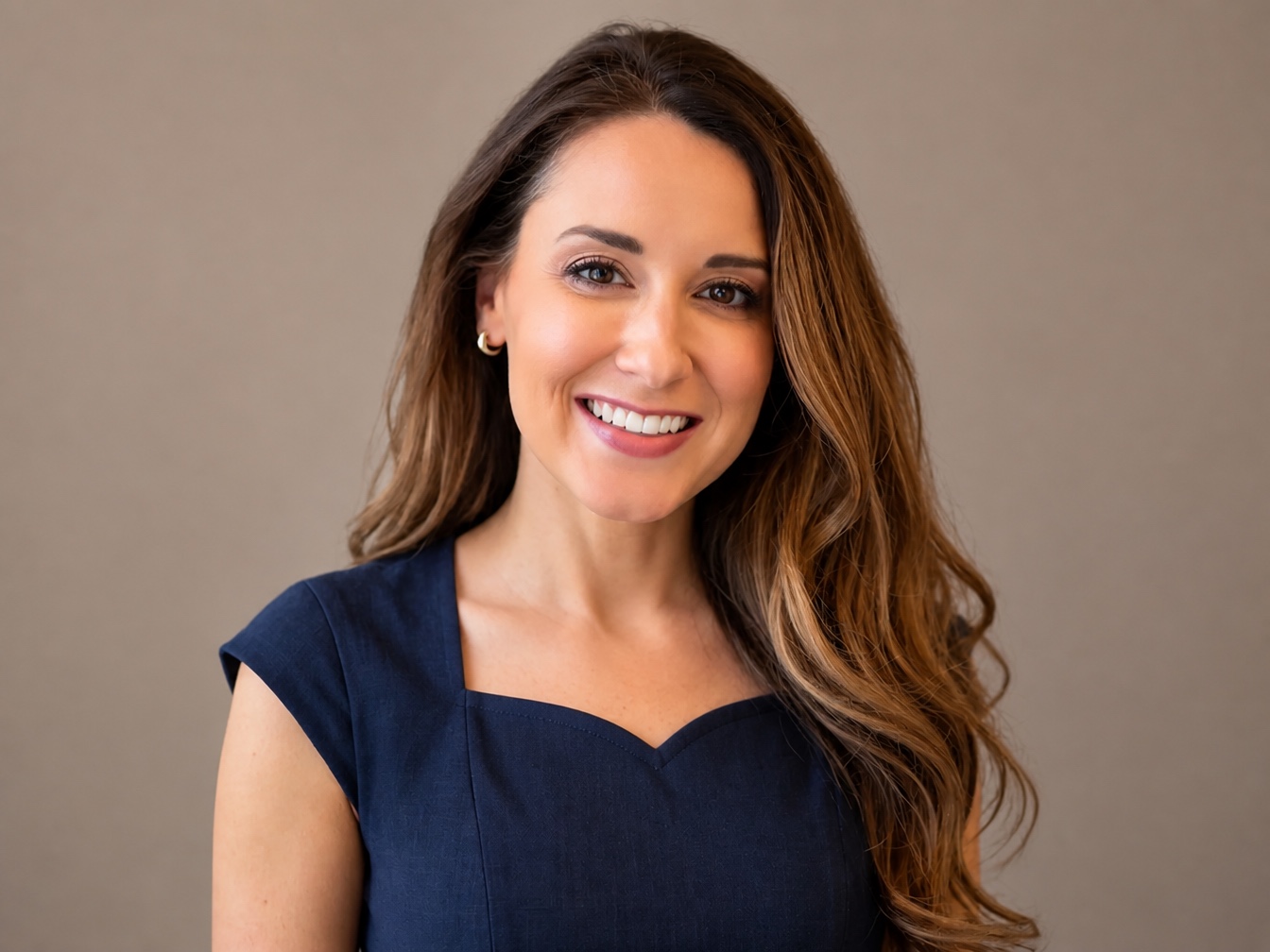
About the author
Lauren Citro, RN, BSN, MSCP, C-RHI
Patient Advocate & Fertility Industry Professional
Lauren is an experienced women's and reproductive health professional. She has worked for more than 8 years in strategic operations and product development, building education & engagement programs that have served millions of hopeful parents across the globe.